As renewable energy deployment accelerates worldwide, expectations are growing not only on the carbon benefits delivered by clean electricity, but also on the environmental performance of the infrastructure that produces it. For developers, customers and investors alike, understanding the lifecycle emissions of renewable energy projects is becoming increasingly important. Better visibility helps identify opportunities to improve environmental performance, strengthen supply-chain transparency and support informed investment and procurement decisions. At Voltalia, this conviction led us to deepen our analysis of the carbon footprint of our renewable energy projects.
Since 2022, Voltalia has assessed greenhouse gas emissions associated with the construction of its renewable energy assets. These analyses cover solar, wind, hydropower and biomass projects and provide a growing set of data on the factors influencing project carbon intensity.
To further improve accuracy, Voltalia developed a dedicated methodology for solar projects during 2024 and 2025. Independently certified in 2026, the methodology evaluates emissions associated with major project components and activities, including photovoltaic modules, electrical equipment, construction materials and transport.
The objective is straightforward: move beyond measuring emissions and better understand where reduction efforts can have the greatest impact.
The analysis revealed that photovoltaic modules are by far the largest contributor to the carbon footprint of solar projects.
Across projects assessed using the certified methodology, photovoltaic modules represented approximately 70% to 75% of total project emissions. In some projects, this share exceeded 80%.
This finding provides an important insight for the renewable energy sector. While project design and construction practices remain important, equipment sourcing decisions can significantly influence overall environmental performance.
As regulatory expectations evolve, procurement decisions increasingly need to balance several dimensions, including performance, cost competitiveness, sustainability, supply-chain resilience and access to reliable environmental data. Emerging European frameworks are reinforcing the importance of transparency and resilience within sustainable energy value chains.
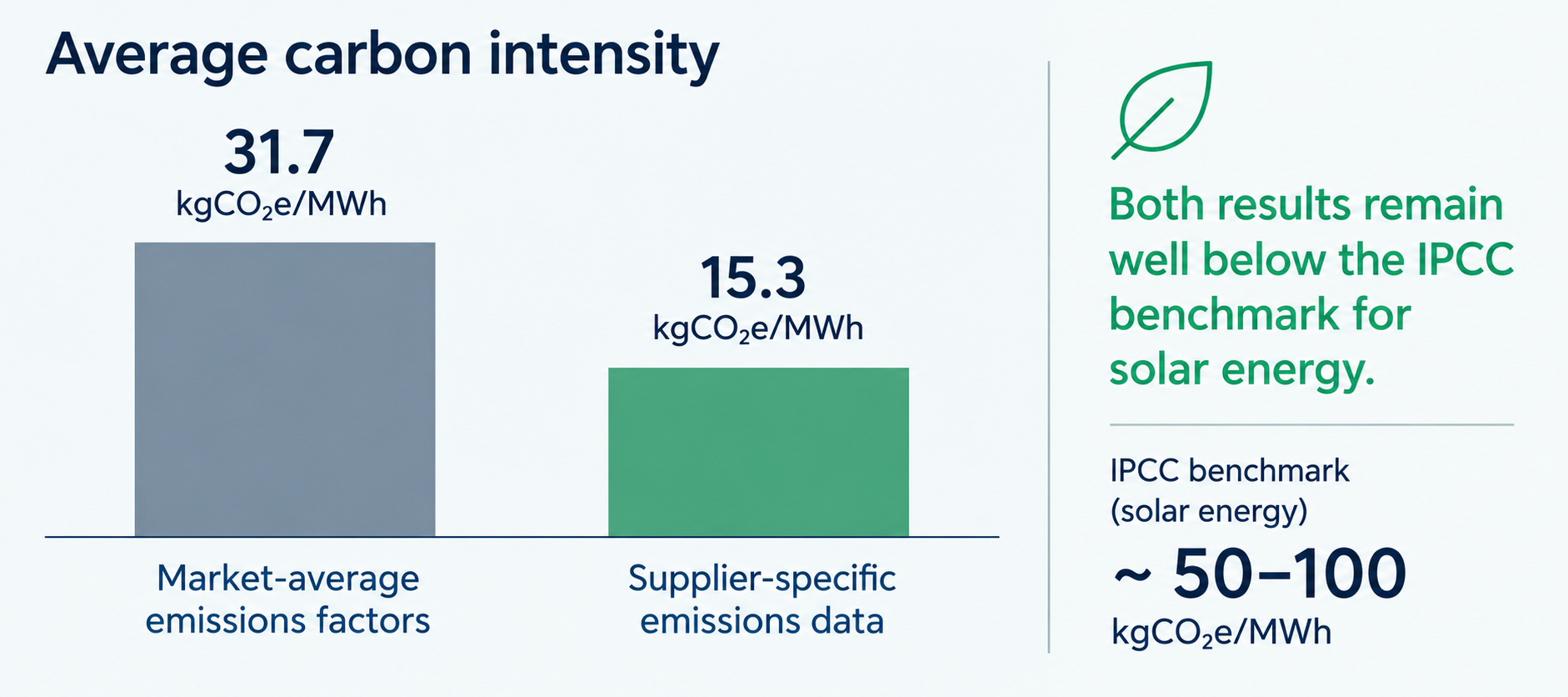
Better data enables better decisionsA second key finding emerged when comparing projects assessed with market-average emissions factors against projects for which supplier-specific emissions data was available. Projects using supplier-specific data achieved an average carbon intensity of 15.3 kgCO2e/MWh, compared with 31.7 kgCO2e/MWh for projects relying on market-average values. Both results remain well below the IPCC benchmark for solar energy, while illustrating the value of more precise and transparent environmental information. For developers, this information helps identify which components drive emissions and where improvement opportunities exist. For suppliers, it highlights the growing importance of providing robust and verifiable environmental data. Most importantly, more accurate data supports better-informed procurement decisions by helping decision-makers evaluate environmental performance alongside technical specifications, reliability, availability and economic considerations. |
Average carbon intensity and IPCC reference |
Sustainability data creates value when it informs decisions.
The insights generated through Voltalia's methodology are already contributing to discussions around procurement practices, supplier engagement and the integration of environmental considerations into project development processes.
The objective is not to optimise a single indicator, but to improve decision-making by providing greater visibility on the environmental impacts associated with key project components.
This approach reflects a broader trend across the renewable energy sector, where sustainability, supply-chain quality, resilience and long-term project performance are becoming increasingly interconnected.
Looking aheadAs renewable energy markets continue to expand, transparency will remain a key driver of continuous improvement. Voltalia intends to continue extending project-level carbon footprint assessments across its renewable energy portfolio while increasing the availability and use of supplier-specific environmental data. The company also aims to further integrate environmental considerations into procurement processes and supplier engagement. Beyond emissions transparency, developers across the sector face growing expectations regarding supply chain resilience, sustainability performance, and responsible sourcing. Robust data will play an increasingly important role in helping companies navigate these challenges while maintaining competitiveness and delivering long-term value. |
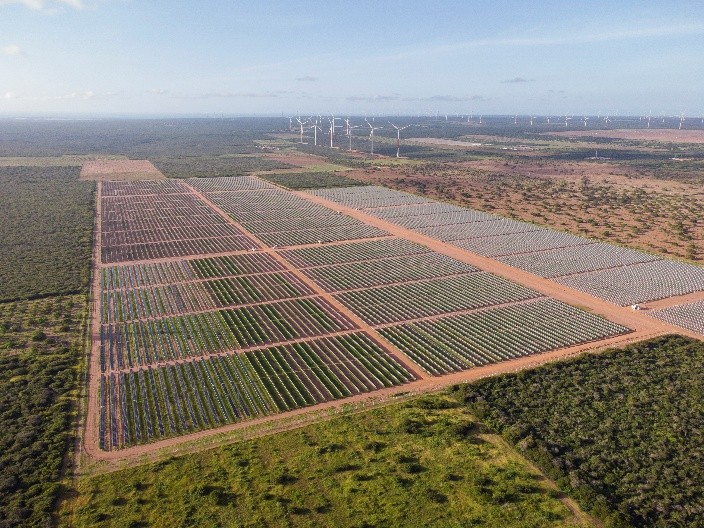
Hybrid project Solar Serra do Mel 1 & 2, Brazil |
For Voltalia, the ambition is clear: use data not only to measure environmental impact, but also to support better decisions by considering environmental performance alongside technical, operational and economic criteria throughout the lifecycle of renewable energy projects.


Need more information? Contact us.